How To Create A Family Memory Jar
A practical step-by-step guide to how to create a family memory jar, including preparation, instructions, common issues, tips, and next steps.
How To Create A Family Memory Jar
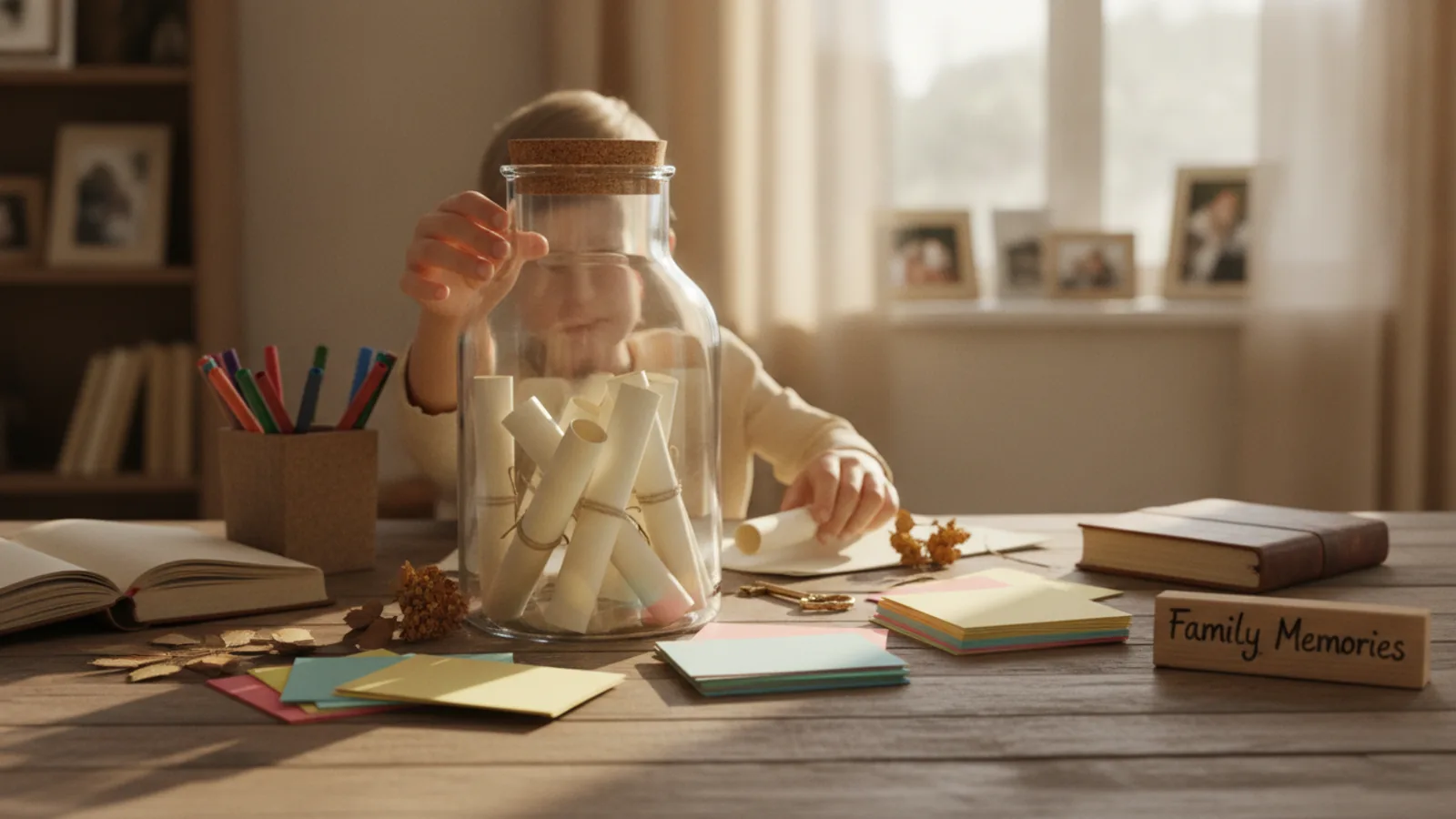
A family memory jar is a simple container where you and your household collect small written notes about everyday moments, funny sayings, and proud achievements throughout the year. At the end of the year, or on a chosen special date, you open the jar and read the notes together. The project costs very little and builds connection, because it turns ordinary days into a shared record that your family can revisit for years.
Fast Answer
- Choose one clear container with a lid, keep a small pad of paper and a pen beside it, and ask every family member to drop in one short note whenever something good happens.
- Set a regular reading date, such as a birthday or the last day of the year, and keep the jar visible so the habit does not fade after the first week.
Before You Start
- Pick a container that is easy to open and close, large enough to hold many folded notes, and safe to keep on a shelf or counter where everyone can reach it.
- Cut or buy small slips of paper, place them in a small basket next to the jar, and put two pens in the same spot so writing a note takes only a moment.
- Choose a regular reading date with your family, write it on a calendar, and decide who will store the jar safely until that day arrives.
- Explain the idea to each family member in one or two sentences, and agree on one simple rule, such as one note per person per week, so the jar fills without pressure.
Step-by-Step Instructions
Choose and prepare the jar
Start by selecting one container that suits your household. A clear jar with a wide mouth works well because you can see the notes stack up, and a wide opening makes dropping in folded paper easy. Wash and dry the jar completely, then remove any old labels or sticky residue so the surface is clean. If you want to decorate it, wrap a strip of paper around the middle and secure it with tape, or write the family name and the starting year on a card taped to the front. Place the jar in a spot that everyone passes daily, such as a kitchen counter or a hallway shelf. Check that the lid closes firmly but opens without effort, because a stiff lid will stop people from adding notes. This check matters because the jar must be inviting, not frustrating, for the habit to survive past the first week.
Stock the writing station
Next to the jar, create a small writing station. Put a pad of small paper squares or a stack of cut slips in a shallow basket, and place two pens in a cup beside it. Keep the slips small, roughly the size of a business card, because short notes are easier to write and easier to read later. Choose pens that write clearly on the paper you selected, and test one slip yourself before inviting the family to use the station. If younger children want to take part, add a few colored pencils or crayons so they can draw a picture instead of writing words. Check the station every few days and refill the paper before it runs out, because an empty basket silently tells everyone that the project has stopped. This small act of restocking keeps the habit alive without anyone needing a reminder.
Set simple family rules
Gather your family for a short conversation, no more than ten minutes, and agree on how the jar will work. Decide what kinds of moments belong in the jar: a funny sentence someone said, a skill someone practiced, a kind act, or a small victory. Agree on a minimum that feels light, such as one note per person each week, and make clear that more is welcome but never required. Choose whether notes can be anonymous, or whether each person signs their name, and settle the question of whether sad or difficult moments may also go in. Many families include both happy and hard moments, because the jar then reflects real life. Write the agreed rules on a card and tape it near the jar. Checking the rules together prevents confusion later and helps quieter family members know their contributions are wanted.
Build the daily writing habit
The jar only becomes a memory keeper if notes actually go in. Attach the writing moment to something your family already does, such as dinner, bedtime, or the end of a weekend walk. At that moment, ask one open question, like what made you smile today, and give everyone thirty seconds to write. Keep the slips close by so no one has to leave the room. If a family member cannot think of anything, offer a prompt from a short list you keep near the jar. Accept drawings, single words, and short phrases as valid notes. At the end of each week, check the jar and count the new slips quietly, not as a test but as a sign of activity. This check shows you whether the habit is growing or fading, and it gives you a chance to refresh the prompts before interest drops.
Store and protect the notes
As the jar fills, protect the notes so they stay readable until the reading day. Keep the lid on when the jar is not in use, and place the jar out of direct sunlight, because bright light can fade ink over many months. Avoid damp spots such as a windowsill above a sink or a shelf near a bathroom. If your jar is glass and sits on a hard floor, move it to a stable surface where it cannot be knocked over. Once or twice during the year, open the jar and gently press down the notes so there is room for more, but do not sort or read them yet. Check that the paper is dry and that no slips have stuck together. This check matters because damaged or faded notes cannot be recovered, and the whole point of the jar is to read those moments later.
Plan the reading day
Choose a reading day that fits your family, such as the last day of the year, a birthday, or the first day of a school break. Mark it on a calendar and remind everyone a week ahead so they can look forward to it. On the day, clear a table, set out the jar, and let each person take turns pulling out a note and reading it aloud. Keep the pace relaxed and allow laughter, questions, and extra stories. After reading, decide together what to do with the notes: place them in an envelope or folder labeled with the year, or start a second jar for the next year. Check that every note has been removed from the jar before you store it, because a slip left behind will be mixed into the next year and lose its place. This final check keeps each year's memories separate and easy to revisit.
Quick Reference
| Situation | Action | Why it helps |
|---|---|---|
| The jar has been empty for more than two weeks and nobody is adding notes. | Bring the jar to the dinner table, read one prompt aloud, and ask each person to write a single short answer on a slip before the meal ends. | Moving the jar into an existing routine removes the extra step of remembering it, and writing together makes the habit social rather than a private chore. |
| A family member says they cannot think of anything worth writing down. | Offer two specific prompts, such as a moment that made you laugh or a small thing you finished this week, and accept a drawing or one word as a complete note. | Open-ended requests create pressure, while concrete prompts lower the effort and show that small, ordinary moments are exactly what the jar is meant to hold. |
| The jar is nearly full and the reading day is still months away. | Move the current notes into a labeled envelope or folder, seal it, and place it with the jar so the family can start filling the jar again. | Emptying the jar prevents overflow and lost slips, and labeling the envelope keeps the earlier notes together so they can be read in order on the planned day. |
Common Issues
- Notes are added for a few weeks, then the family forgets the jar completely.: Attach the writing moment to a routine that already happens every day, such as dinner or bedtime, and place the jar and paper directly in that spot. Set a weekly reminder on a shared calendar, and at the end of each month, count the new slips together and refresh the prompt list so the habit has a visible rhythm.
- Young children want to help but cannot write full sentences.: Give them a stack of slips and colored pencils, and invite them to draw a face, a shape, or a single word that stands for their memory. Ask an adult to write a short caption on the back in pencil, including the date, so the drawing can be understood months later when the details have faded.
- The notes become repetitive and the jar feels less meaningful over time.: Introduce a rotating theme each month, such as kind acts, new skills, funny sayings, or moments of courage, and post the theme near the jar. Ask each person to choose one theme they care about, and occasionally read one old note aloud at dinner to remind the family what kinds of memories are worth capturing.
Advanced Tips
- Create a second small jar for hard or sad moments, and read those notes separately at a calm time, because families often find that naming difficulties together is as valuable as celebrating happy events.
- Number the slips as you add them, or write the date in the corner, so the reading day follows a rough timeline and the family can see how the year unfolded from start to finish.
- Invite visitors, grandparents, or close friends to add one note during their visit, and mark those slips with a small symbol so the jar holds voices from outside the household as well.
Final Checklist
- The jar is clean, has a lid that opens easily, and sits in a safe, visible spot that every family member can reach.
- Paper slips, at least two pens, and a short list of prompts are stocked beside the jar and checked at least once a week.
- The family has agreed on simple rules and a reading date, and both are written down where everyone can see them.
- A plan is ready for storing the notes after the reading day, including a labeled envelope or folder for each year.
FAQ
What kind of container works best for a family memory jar?
Choose a container with a wide opening, a lid that closes securely, and a size that holds a year of folded slips without overflowing. Clear glass or sturdy plastic lets you see the notes build up, which encourages the family to keep adding. Avoid narrow-necked bottles, because slips get stuck, and avoid anything fragile that sits in a high-traffic area. If you cannot find a jar, a clean box with a removable lid works just as well.
How often should we read the notes in the jar?
Most families read the jar once a year on a chosen date, such as the last day of the year or a family birthday, because a full year of notes creates a satisfying review. Some households prefer to open the jar every few months, which keeps interest high but shortens each reading. Pick one schedule, write it on a calendar, and remind everyone a week ahead so the day feels like an event rather than a chore.
What should we do with the notes after we read them?
Place the notes in an envelope or folder labeled with the year, and store it somewhere dry and out of direct sunlight. Keeping each year separate makes it easy to revisit a particular period later, and it prevents old notes from mixing with new ones. If you prefer a digital copy, photograph the slips before storing them, but keep the paper originals as well, since handwriting carries meaning that a photo cannot fully replace.