What belongs in a family memory box?
A small collection with useful labels, rather than a box of unexplained objects.
Give the box a purpose
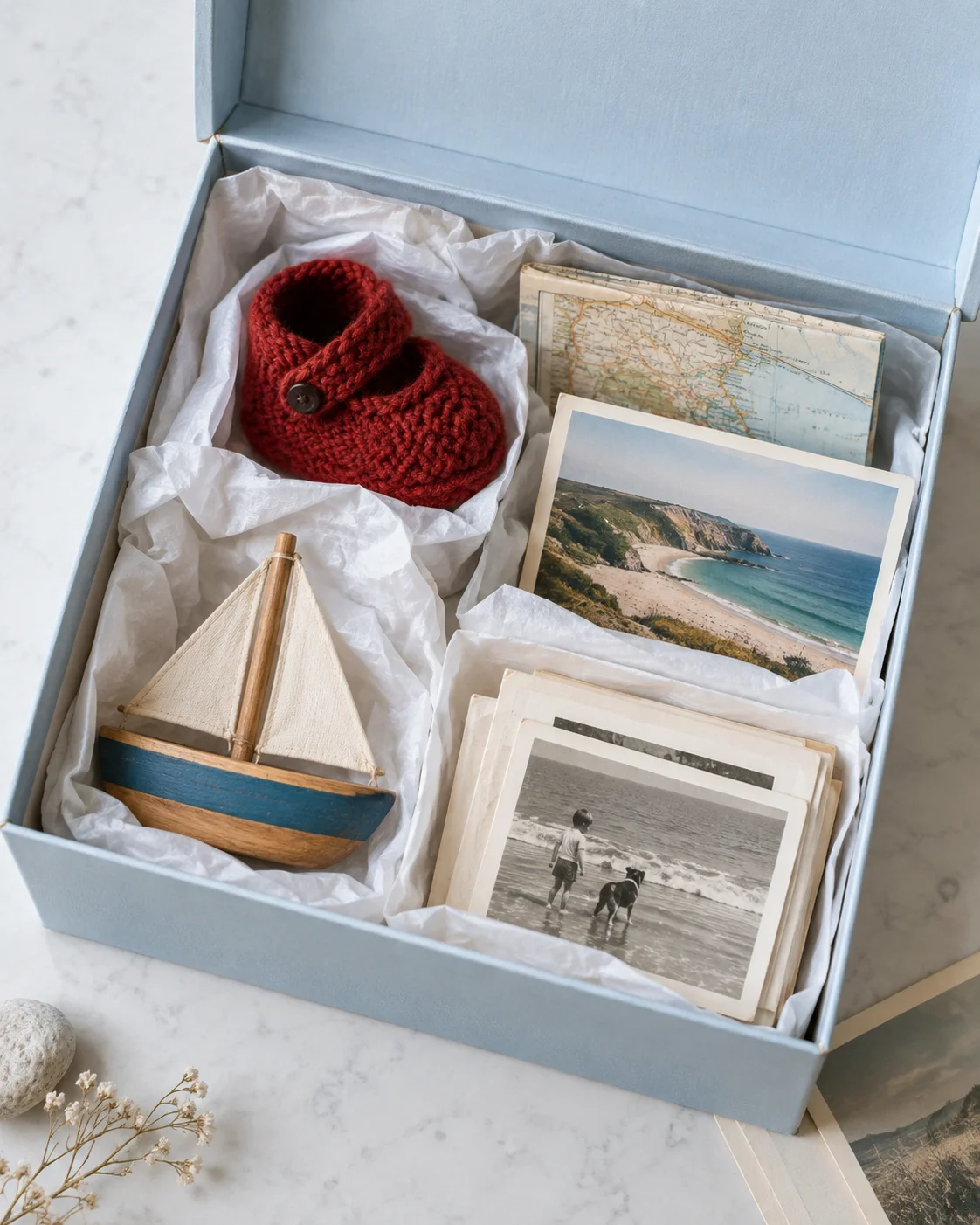
Choose a person, a period or a shared event. A defined theme helps you decide what belongs and stops the box becoming an overflow drawer. Include things with a story: a handwritten recipe, a ticket from a meaningful journey or a copy of a favourite photograph. An object does not need to be valuable to be worth keeping. Be selective with bulky items, and photograph anything that cannot be stored safely in the box. The photograph can sit beside its story.
Add context without altering the object
Write a separate note describing what an item is, who it belonged to and why it matters. Keep facts, family recollections and guesses distinct. Do not tape labels directly onto delicate paper, textiles or photographs. Different materials may need different storage: metal, food residues, dried flowers and unstable plastics can affect neighbouring objects. For valuable or fragile items, ask a conservator about suitable packaging rather than treating a decorative gift box as archival protection.
Make it a shared collection
Include a contents list and an invitation for the recipient to add their own account. Agree who should keep the box and who may borrow or photograph its contents. Avoid adding confidential letters or documents without permission. Store the box somewhere dry and stable, and review it occasionally for signs of damage. A thoughtful memory box is not sealed forever; it is a collection people can understand, enjoy and care for without needing the original collector to explain every item.
Keep original files and objects safe, and ask permission before sharing another person's story.
Illustrative imagery. Our editorial approach.