Layflat or traditional binding? Start with your photographs
A practical look at page spreads, size and the way an album will be used.
Match the book to the pictures
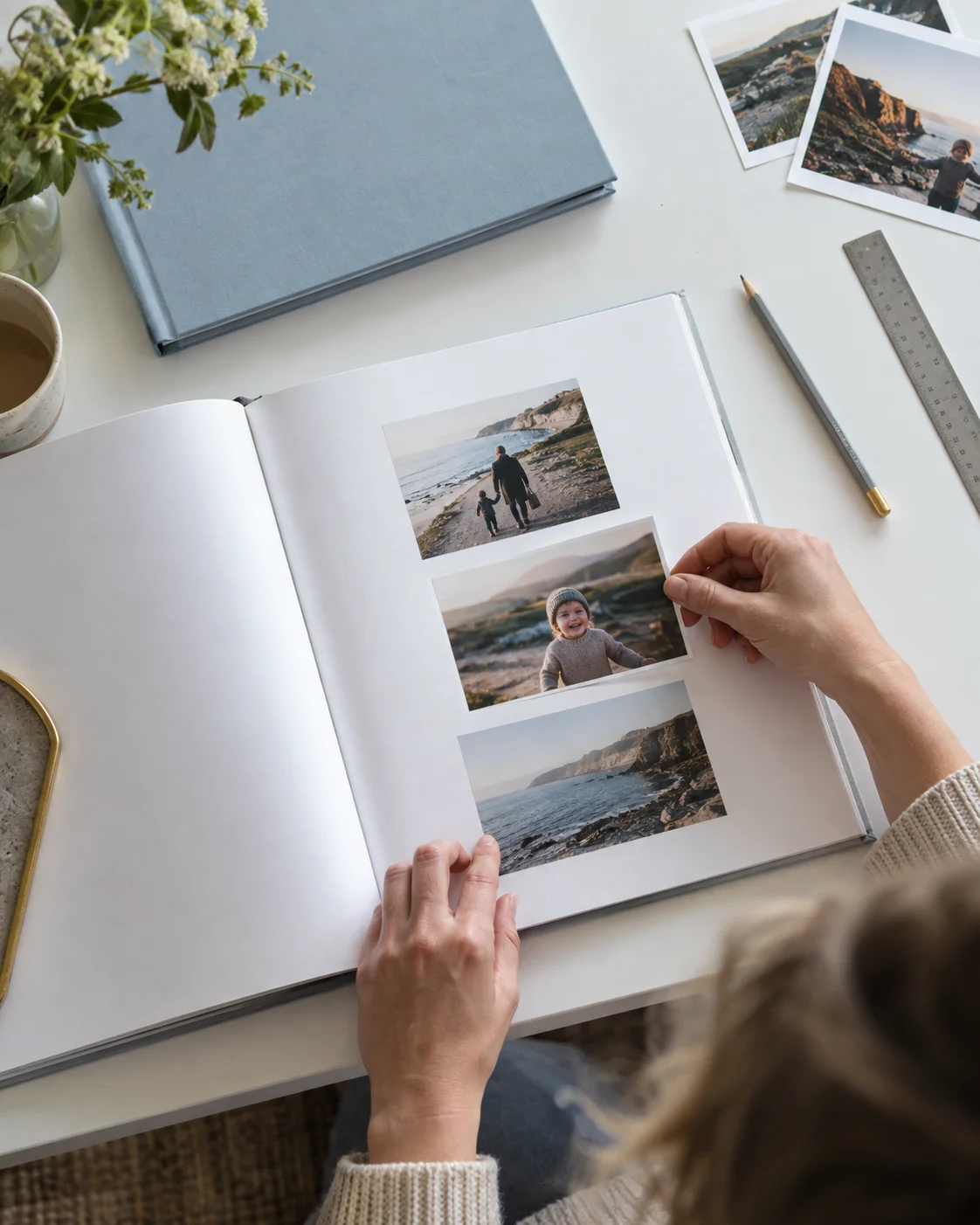
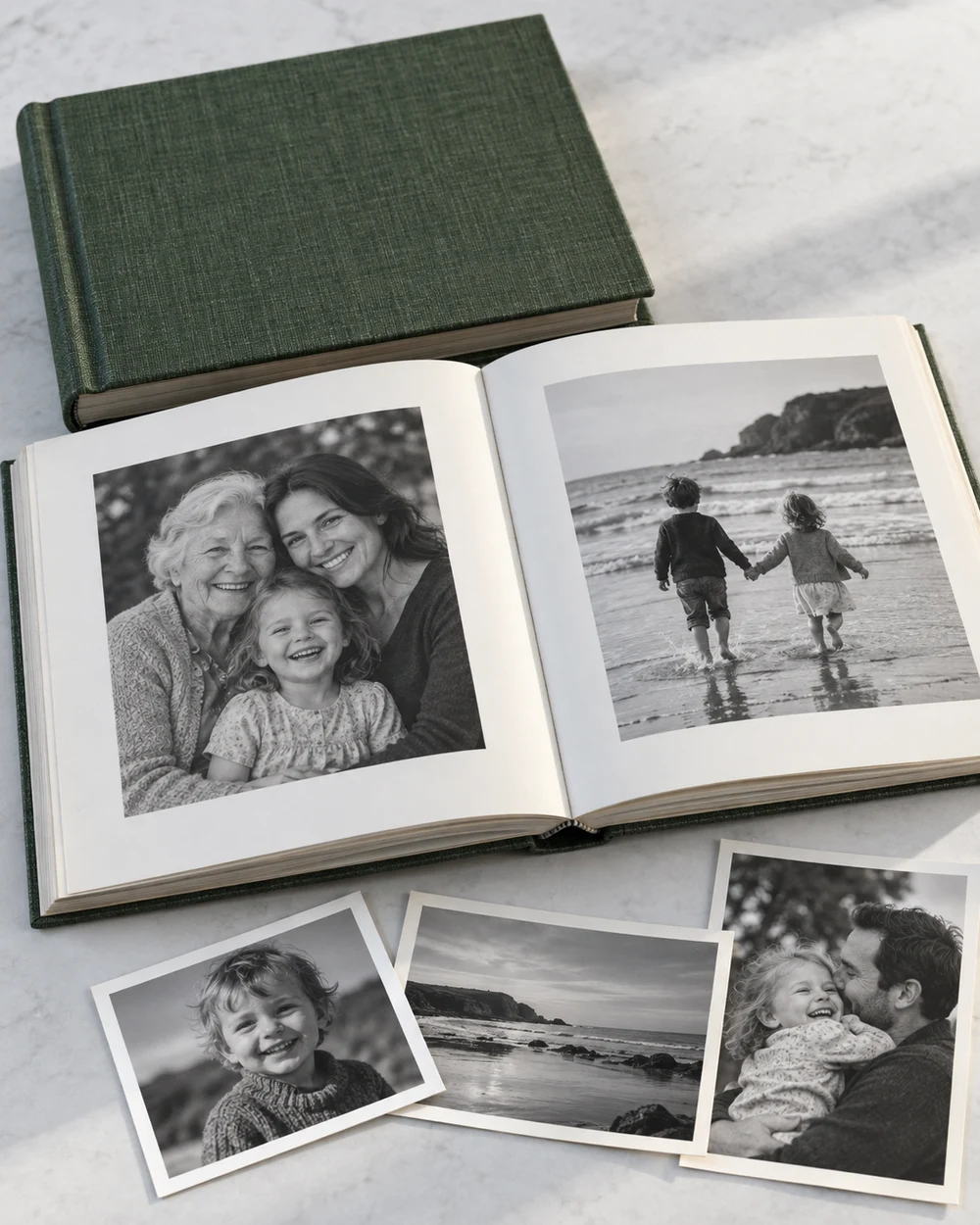
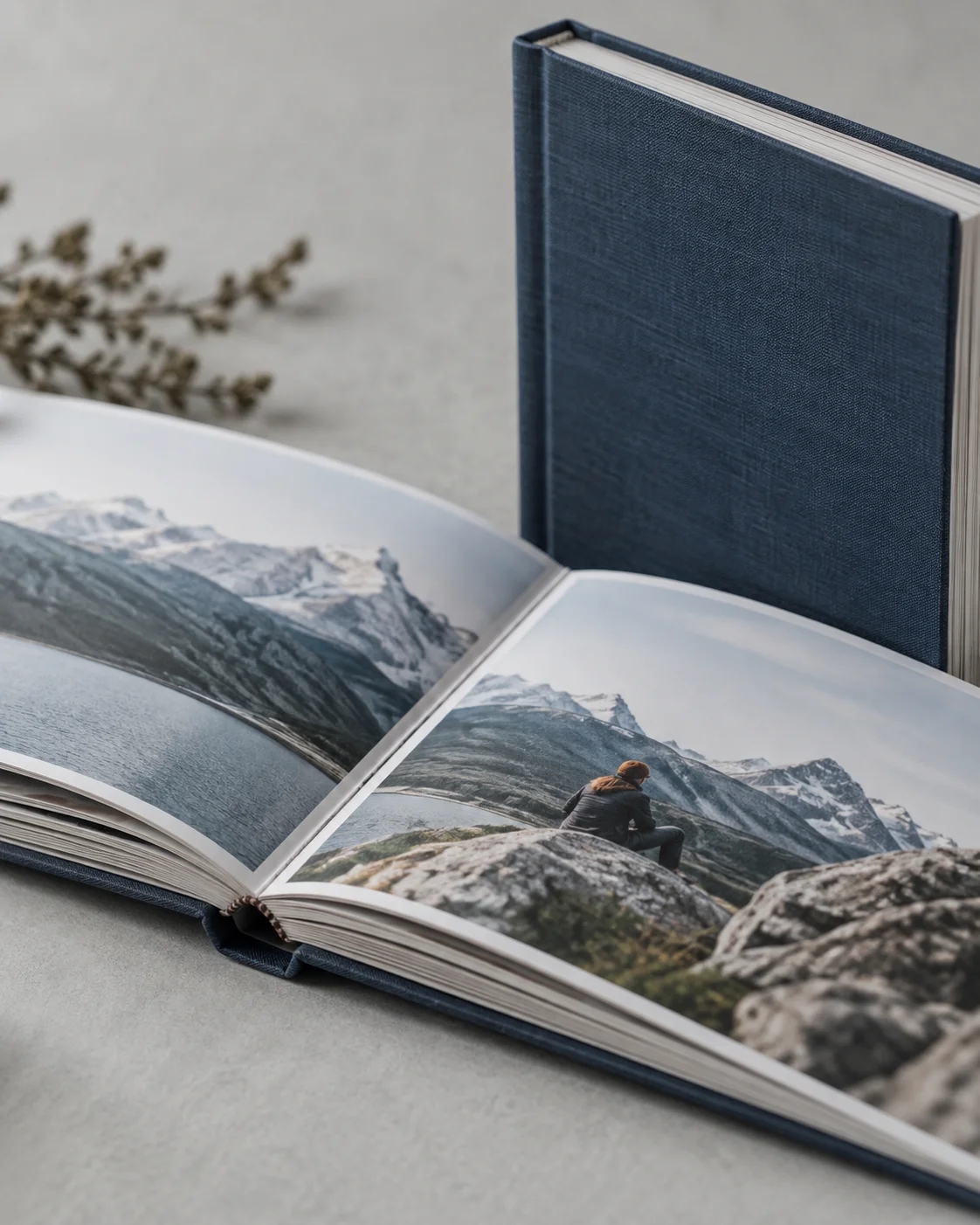
A wide landscape or group photograph can lose its centre in a deep gutter. A layflat format may make that spread easier to see, but it is not automatically the best answer for every project. A traditional bound book can work well for separate images, longer captions and compact family histories. Draw two or three representative spreads on paper before comparing products. Consider how much text you want and whether the book will mostly be read on a table or held in somebody's hands.
Look beyond the cover
Page thickness, paper finish and cover material all influence the feel of a book. A heavily textured paper can suit illustrations but may render a photograph differently from a smooth photographic surface. Ask for a sample or review the supplier's own material specifications. Do not assume two products described as layflat have the same construction. Check whether extra pages alter the price, whether a slipcase is optional, and whether the chosen size fits the shelf where the book will live.
Check the proof before committing
Compare the total delivered price, the production estimate and the terms that apply to personalised goods. Check the preview at the final print size, including captions near the spine. If you are making a gift with a fixed date, leave time for proofing and possible corrections rather than relying only on the advertised dispatch window. Keep a copy of the image files and captions outside the supplier's editor so that your project is not dependent on one account or one printing service.
Keep original files and objects safe, and ask permission before sharing another person's story.
Illustrative imagery. Our editorial approach.